Christmas in Ancient Rome: Saturnalia, banquets and flavours
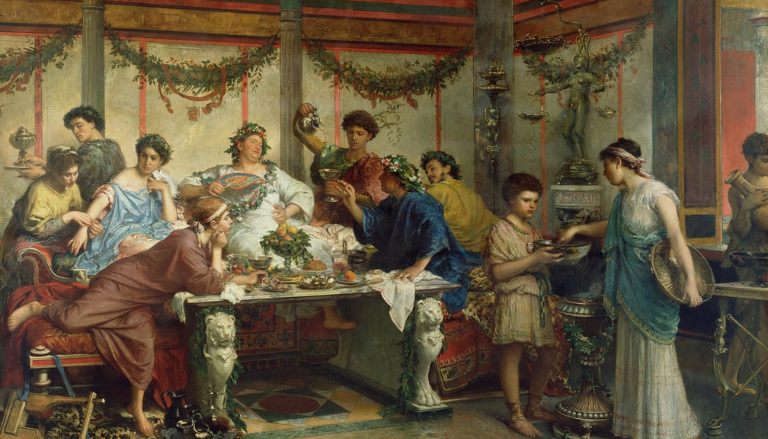
When we think of Christmas, we picture lights, nativity scenes, family dinners and presents under the tree. In Ancient Rome, however, the event that took place at the same time of year was not Christmas as we know it today, but rather Saturnalia: a popular and “reversing” festival that combined religion, conviviality and social licence. In this article, we will look at the similarities and differences between the two celebrations and discover the dishes and flavours that enlivened the tables during Saturnalia. Saturnalia: when, how and why Saturnalia were festivals in honour of the god Saturn, originally celebrated on 17th December in the Roman calendar and then gradually extended to 23rd December in the Imperial era, until it became a period of celebrations that could last a week. The festival included a public ceremony at the Temple of Saturn in the Forum, followed by private banquets, exchanges of gifts and a general festive atmosphere. A distinctive feature of Saturnalia was the suspension of social norms: a sort of symbolic “reversal” of roles was practiced (masters served slaves at table), gambling was allowed in public, and a carefree atmosphere prevailed, recalling the mythical ideal of the Golden Age. Over the centuries, this element of social inversion also influenced other European festivals and traditions. Saturnalia vs Christmas: similarities and differences Similarities Time of year and conviviality: both celebrations fall in the middle of winter (December) and are characterised by the centrality of banqueting, family gatherings and the exchange of gifts or presents. During Saturnalia, there was a practice of exchanging small gifts (such as the sigilla on Sigillaria day), a trait that clearly recalls the exchange of Christmas gifts. Decorations and symbols of light: although with different meanings, both pagan and Christian festivals used decorative elements to counteract the winter gloom (garlands, lights, evergreens). Differences Religious origin and meaning: Saturnalia was a pagan festival linked to agriculture and the worship of Saturn; Christmas is a Christian festival celebrating the birth of Jesus. The religious intent, symbolism and liturgical practices are therefore very different. Social character: while Christmas (in its modern forms) promotes values such as charity and family, Saturnalia emphasised the temporary breakdown of social hierarchies, ritual chaos and the allegory of freedom. Whereas Christmas tends to be institutionalised (masses, rituals), Saturnalia was a more “popular” and uninhibited festival. What did people eat during Saturnalia? The most popular dishes and ingredients Saturnalia was a synonym of abundance: ancient sources and modern reconstructions tell us of rich banquets, with meat, charcuterie, desserts and flavoured wine. Here is an overview of the specialities that recur most frequently in historical accounts and recipes taken from ancient texts (such as Apicius) and modern research. Meat, charcuterie and rich dishes Among meats, roast pork, hams and salted shoulders were highly prized; banquets could also feature lucanica (sausages), young goat and poultry dishes. Some recipes by Apicius and modern reconstructions suggest elaborate preparations with sweet and spicy sauces. Legumes and food of the common people For the ‘plebeian’ part of the festival, legumes (broad beans, chickpeas, lentils) were a basic food, inexpensive but substantial, often prepared in soups or stews. Cheese and bread also played a central role in common meals. Sweets and delicacies (dulcia) The Romans loved sweets: Saturnalia tables were full of dulcia (sweets), dried fruit, honey and fried or caramelised products. Some reconstructed recipes include mustacei (“must sweets”), dried fruit and fried sweets that we might associate with our winter treats today. Drinks: mulsum and spiced wine Mulsum, wine sweetened with honey, was a typical drink at Roman banquets and probably widely consumed during Saturnalia. Wine was often flavoured or mixed with spices and honey for festive occasions. Edible gifts and local specialities Sources also report the exchange of food products such as cheese, sweets and dried fruit as gifts. In some cases, masters offered gifts to slaves: this aspect of ritual generosity accompanied the element of the suspension of hierarchies. Why learn about Saturnalia today? A heritage of conviviality Why learn about Saturnalia today? A heritage of conviviality Studying Saturnalia does not mean “replacing” Christmas, but understanding the cultural roots that have spread across Europe: many festive practices, from decorating with evergreens to exchanging gifts, have parallels in pagan end-of-year rituals. Understanding these ties enriches our cultural and gastronomic experience, enriching the way we talk about the holidays and the dishes that accompany them. If you want to taste the Rome of the holidays, with revisited ancient recipes and seasonal flavours, come and visit us at Ragno D’Oro, in the heart of the Prati district. Book your table for December now and experience the festive atmosphere with us!