Interesting facts you didn’t know about the Prati district
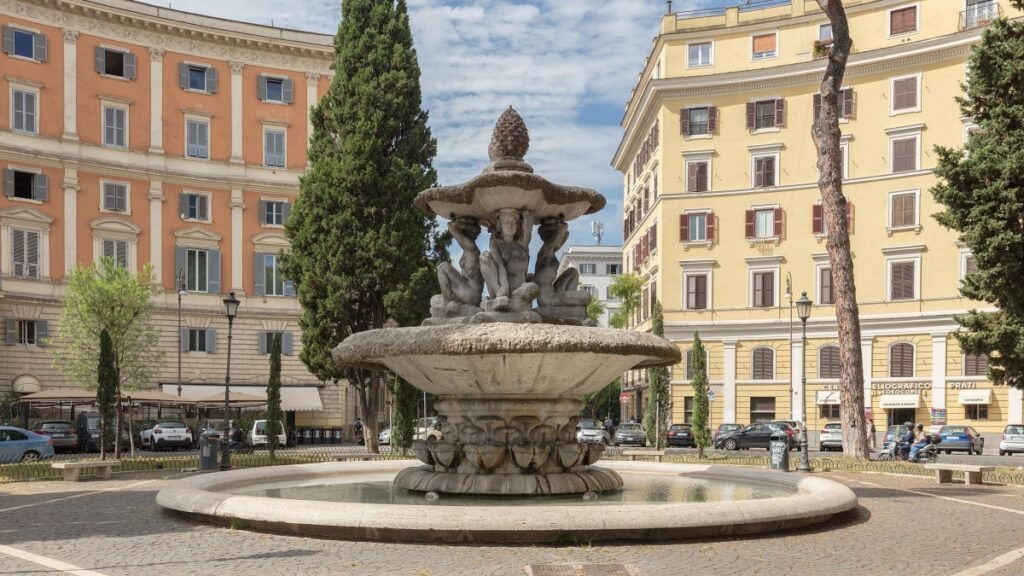
Today, the Prati district is one of the busiest and most historic places in Rome, full of art and tradition. Yet, this place hides some unexpected curiosities. Today we are here to share them in this article! The origins of the name Until 1883, this area, now known as the Prati district, consisted of vast cultivated and natural fields, swamps that were only later cleared and a few isolated farmhouses, while in even older Roman times it was common to find canes and vineyards, property of Domizia. Once called ‘Prati di Castello’ in reference to its proximity to the famous Castel Sant’Angelo, from this it currently maintains its name ‘Prati’, a symbol of what it was in ancient times. With the taking of Rome in 1870 and the subsequent Plan of 1883, this large natural area was urbanised and built up to what we are familiar with today, with the official constitution of the district in August 1921. Prati: originally a laic neighbourhood Today, when we think of this iconic Roman neighbourhood, we tend to associate it with the large groups of tourists and religious people who colour the streets, moved by their faith and their desire to visit the Christian places of worship that flourished in this specific area. It may surprise you to know that, following the 1883 ordinance, the Rome City Council indicated a very specific predisposition for the new urbanisation of the area: it was essential that the vision of St. Peter’s dome was obstructed by any means. This is explained by the fact that that historical period was characterised by tensions between the State and the Church; we are in fact in post-unification Italy, and the broad anti-clergy stance was no secret. This is how this area came to host the administrative and military structures of the Kingdom of Italy; indeed, it is enough to note how the names of the streets still refer to the great commanders, literary and secular figures and heroes of the Renaissance from whom the historic square takes its name. The differences between yesterday and today From an area of endless greenery to an elegant area full of knowledge, from the ancient to the modern that we now breathe. Today and compared to the past, the Prati district is an increasingly commercial and touristic area, full of cultural and entertainment attractions in a larger sense, like the many markets, among which the Mercato Trionfale stands out, that contribute to animate the streets or buildings that house organs of national importance, such as the Court of Justice in Piazza Cavour. Clear is how its economy is no longer based on the mere agricultural aspect. On the building level, however, it can be seen that while there used to be more irregularity, with a predominant Art Nouveau style and buildings of different sizes, today the style that characterises it is Umbertine, with strong geometries and symmetries that confer it its iconic elegance. These modern differences give it a prestigious real estate value, definitely not to be underestimated. It is certainly very interesting to discover how sometimes what we are used to can hide almost opposite origins. We hope we have provided you with a few more cultural insights with this article, to be remembered the next time you decide to immerse yourself in the streets of one of the most densely populated districts of the beautiful city of Rome. And if you get a bit of an appetite while strolling, remember that the team of Ragno D’Oro awaits you with open arms every day at Via Silla 26. Contact us now to book your table!
Carnival in the Roman tradition
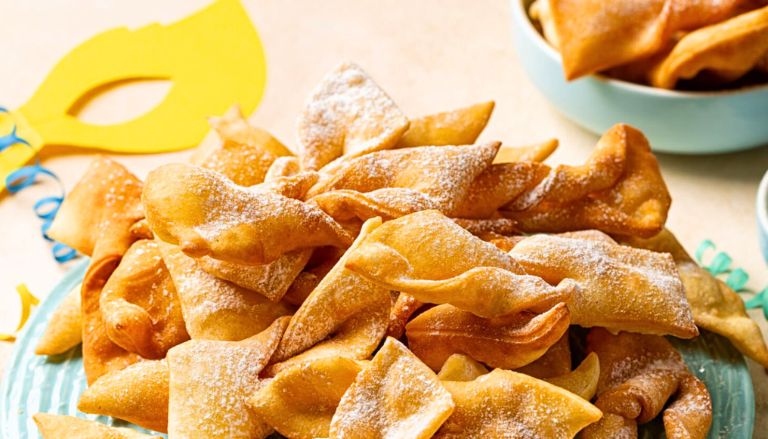
We are now in the most cheerful time of the year with costumes, festoons and confetti populating the squares and filling them with colour, while mouth-watering dishes fill the tables of Italians. In this article we will talk about Carnival in the Roman culinary tradition, so get ready for plenty of sweets with frappe, castagnole and ravioli! Frappe Fried or baked, frappes are crispy golden strips covered with powdered sugar. You can find them either plain or flavoured with vanilla or various liquors and covered in chocolate for the sweet-toothed. Today, they are considered the descendants of the ancient Roman frictilia, typical sweets fried in pork grease, which were distributed in the streets on the occasion of Saturnalia, when people celebrated gluttony and the abundance of the earth. Castagnole Also available in both a fried version and a lighter oven-baked variant, castagnole are the ultimate sweet when it comes to Roman Carnival. Their shape is reminiscent of chestnuts, from which they take their name, but they are balls of baked dough covered in granulated sugar. There are ones for all tastes, in fact you can enjoy them plain or filled with cream, ricotta or chocolate. Ravioli Last, but not least in terms of goodness, we find ravioli. Similar in shape to the famous pasta, but don’t be fooled: these are real desserts! Fried or baked, their strength is their filling, which in the most traditional versions includes chocolate, ricotta or even cinnamon, although today there are many variations, such as cream-flavoured or fruit jams. Now that we have told you about these delicacies, don’t waste any time and hurry up and taste them while they are available! For a dive into traditional Roman cuisine, we are waiting for you every day at Ragno D’Oro in Via Silla 26, 00192 Rome. Call us on 06 321 2362 to reserve a table or use the form on our website.
Jubilee 2025: Rome renews itself to welcome the world
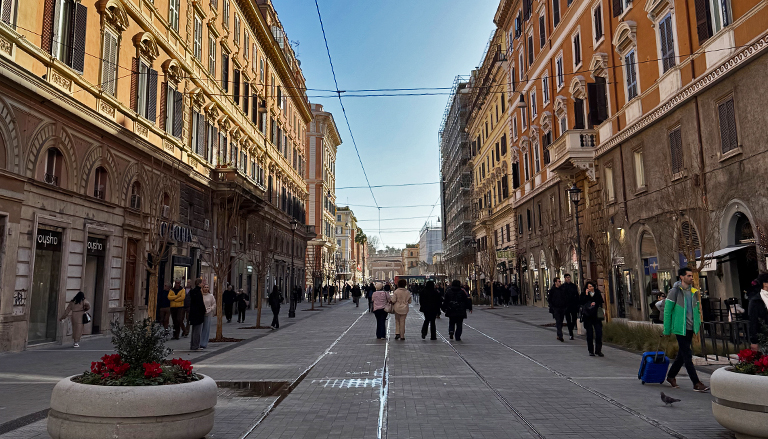
As the Jubilee 2025 approaches, Rome has engaged in a transformation to accommodate the millions of expected peregrines and tourists. Urban renewal works have been completed in several strategic areas of the city, making the Capital more livable, accessible and sustainable. Among the most significant works are the pedestrianization of Ottaviano Street and Risorgimento Square, which now offer large spaces for walking, new green areas and modern street furnitures. In addition, Pia Square has been transformed into a vast walkable plaza connecting Sant’Angelo Castle to San Pietro, giving visitors an environment of extraordinary historical and architectural beauty. The city has also improved public transportation and accessibility for walkers with new sidewalks and infrastructure to break down architectural barriers, promoting sustainable mobility. These measures are part of a larger project that aims to enhance Rome’s historical and cultural heritage, integrating it with modern needs for livability and sustainability. Osteria Ragno d’Oro in the heart of the renovated Prati district In the heart of the Prati district, just a short walk from Ottaviano Street and San Pietro, Osteria Ragno d’Oro is the ideal place to immerse yourself in the traditional Roman tastes before or after a walk through the city’s artworks. Our inn offers a warm and welcoming atmosphere, perfect for families, groups of friends or tourists who desire to enjoy iconic dishes of local cuisine, such as amatriciana, saltimbocca roman-style and many other specialties. Thanks to its strategic position, the osteria is easily accessible to tourists and Romans who want to enjoy the vibrancy of a district that is now more beautiful than ever. Our staff is ready to make you feel at home, with caring service and dishes that celebrate Roman cuisine in all its authenticity. Stop by and visit us at Via Silla 26, or make a reservation at 06 321 2362. We are looking forward to an unforgettable gastronomic experience together, in the heart of Jubilee 2025 Rome!
Roman Christmas dishes: how to find them in tradition

Christmas is approaching and, like every year, it is a good tradition to spend these moments with the family, in front of a large table set to the right order, surrounded by bingo, laughter and relatives. In Rome, there is a long tradition of culinary delicacies that just can’t be missed, and although there are now many reinterpretations, these origins still hold strong roots in many homes. In this article we will tell you about the inimitable Christmas dishes of the Roman tradition, get ready to have your mouth watering! Christmas Eve dinner According to tradition, meat is abolished on 24 December, but fear not: Roman cuisine still provides excellent fish and vegetable dishes for the occasion. Starting with the appetisers, you cannot miss the fried food, usually broccoli and artichokes, elements that are present in every variation in Roman dishes, while for fish we find fried squid and sometimes also shrimps (often presented as a second course) and fried cod. A typical and must-have dish is then the broth of arzilla with pasta and broccoli: a fish that is not so frequently used but is nevertheless much appreciated in this hot, full-bodied and tasty meal, able to please young and old alike. This is followed as a first course by a nice plate of spaghetti with clams. As a side dish, puntarelle salad with a dressing of garlic, oil and anchovy fillets, which make this vegetable particularly popular and suitable as an accompaniment to the above-mentioned dishes, or for those who still have room for something less light, mashed broccoletti and chicory are always a good option. Christmas lunch There is only one serving that can open the dances for lunch on 25 December: stracciatella. Definitely not an ice-cream flavour, it is rather a meat broth (usually chicken) with scrambled egg, pepper, salt, Parmesan cheese, nutmeg and lemon zest that gives it a unique, spiced flavour. First courses include baked cannelloni stuffed with meat or ricotta and spinach according to preference, lasagne or home-made egg fettuccine with meat sauce. A second course that absolutely cannot be missed is fried lamb ribs, or alternatively, for those who want to reduce the amount of fried food, lamb ‘allo scottadito’ with a side dish of baked potatoes. Christmas desserts Did you think this was the end? Clearly not, and we certainly couldn’t leave out the desserts. Among the oldest are pangiallo, which finds its origins in Ancient Rome and more precisely during the Imperial Age. It is made from a mixture of dried fruit, honey and candied citron, orange and lemon peel, which is then baked and covered with a layer of batter. Then there is similarly the panpepato, also made from dried fruit, orange and the addition of cocoa, or for lovers of dry biscuits the Roman tozzetti, similar to cantucci, made from dried fruit and various spices such as cinnamon. Christmas without good food on the table is definitely not the same, having the chance to enjoy these delights surrounded by the warmth of affection is what contributes to making this holiday so magical. We hope we have inspired you with these Roman Christmas dishes!
Ragù: how to find it in Roman dishes
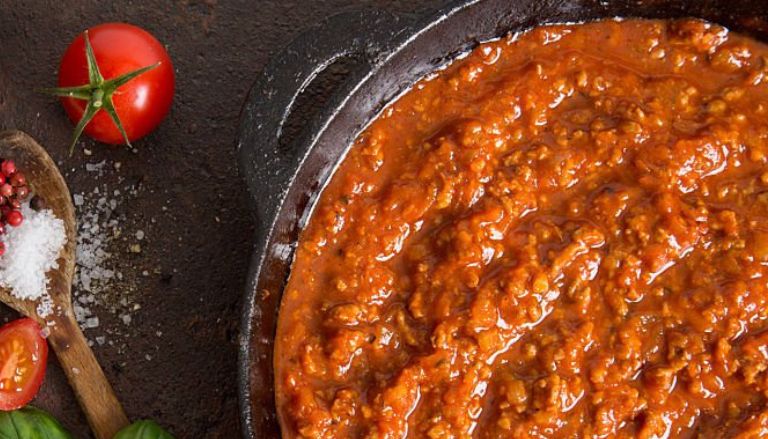
Italian meat ragù is certainly one of the most beloved dishes of the Italian culinary tradition, easily associated with the warmth of home and a Sunday lunch with the family. From the Bolognese one, to the Neapolitan one, to the Apulian one, there are many regional variants that still preserve the core, consisting of meat cooked for many hours in tomato sauce. Origins The etymology of the term comes from the French word ragoût, meaning a medieval dish of stewed meat, originally used as an accompaniment to other dishes. Brought to Italy around 1300 with the proclamation of the Pope from Avignon to the Vatican, the dish was later assimilated and revisited into the recipe known to us today, becoming principally a condiment for various types of pasta. The first variant was the Neapolitan one, made in 1773 by Vincenzo Corrado, which however was still influenced by the French, making it more similar to a stew or braised meat; therefore the real origin of what we are familiar with today is attributed to the Bolognese version of 1891, formalised by the first recipe written by Pellegrino Artusi, which included ingredients such as: veal, celery, onion, carrot, pork belly, the addition of broth during cooking and sometimes milk. It was only in the first decade of the 20th century, however, that we got to the current recipe with the introduction of tomato sauce as an essential ingredient, wine blending and the replacement of macaroni with tagliatelle. Ragù in Roman cuisine Today, almost every region of the peninsula boasts its own reinterpretations and different applications of the iconic ragù, and our beloved capital is certainly no different. In this article we will tell you about three Roman dishes that pay homage to meat sauce in a decidedly original way that is faithful to tradition. Rigatoni with oxtail in tomato sauce Originally a poor and popular dish, today oxtail is to all intents and purposes part of the most typical Roman cuisine and is something you absolutely must try if you really want to immerse yourself in the flavours of tradition. Similar to the classic ragù, in order to acquire tenderness, the tail meat is left to cook in a tomato sauce seasoned with ingredients such as celery and cloves, for about six hours. The accompaniment to rigatoni is perfect, as this typical type of Roman pasta is particularly suitable for thick, full-bodied sauces, and a sprinkling of pecorino cheese with an intense, pungent flavour is used to finish it off. Lasagna Roman style Another perfect recipe for a Sunday lunch with the family, we reveal however that there is not just one way to prepare lasagna, as in Rome there is an entirely typical recipe (and it is still delicious). Forget the béchamel sauce, in this recipe it is the mozzarella cheese that takes its place and the sauce is richer in tomato, while the meat ragù remains one of the key elements to make this dish a true delicacy, consisting of: minced meat, onion, celery, carrot, tomato sauce, oil and salt. Supplì Not to be mistaken for arancine, the Roman supplì is an iconic elongated, fried rice ball, a perfect street food or appetiser. Again, its name originates from surprise, a term often exclaimed by French soldiers during the Napoleonic occupation at the end of the 18th century, who, after the first bite, were captivated by the discovery of its stringy filling, hidden by the crispy external breadcrumbs: composed of rice, mozzarella cheese and, of course, our star ragù sauce. Immerse yourself in tradition If we have impressed you with these traditional delicacies then we invite you to try some of these dishes, and many more, at Ragno D’Oro in Via Silla, 26 (RM). Contact us now to book your table!