Abbacchio allo scottadito
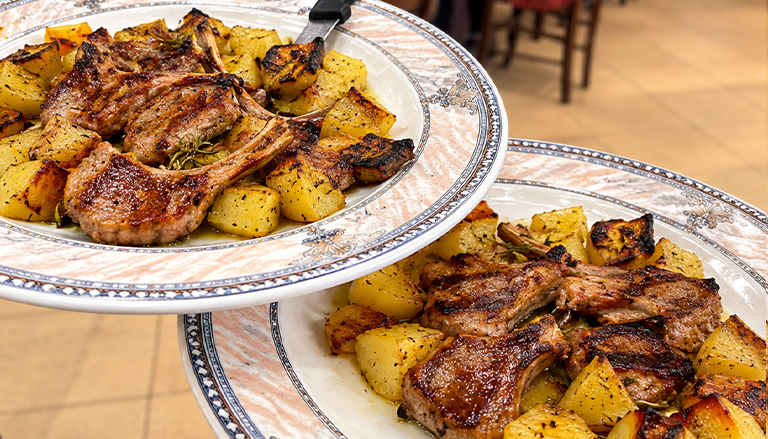
History and secrets of the ultimate Roman main course There are dishes capable of defying time through the strength of their most primal and authentic nature. In the landscape of Roman main courses, alongside the richness of coda alla vaccinara, the comforting texture of trippa, or the intensity of saltimbocca, abbacchio allo scottadito stands out as a dish full of instinct and tradition. It is a recipe where the absence of etiquette elevates the dining experience: no cutlery or gimmicks are needed. Every bite is a ritual that envelops the palate, satisfies the senses, and must strictly be conquered with your hands. The legend born among the pastures of the Roman countryside If today this recipe is an undisputed icon of Easter and Lazio’s gastronomy, the credit goes to the shepherds and charcoal burners of the Apennines and the Roman countryside. During the long, solitary months of grazing and transhumance, there was no access to kitchens or refined equipment. Meals had to be prepared outdoors, using the tools offered by nature. The choice fell on the most tender meat available, which has boasted the IGP (Protected Geographical Indication) certification since 2009. The shepherds would grease the meat with lard, which was easier to carry, and season it with wild herbs foraged from the fields. By cooking the meat on red-hot stones or directly over the glowing embers of campfires, they gave life to one of the cornerstones of Roman cuisine. The pillars of “scottadito”: the harmony of ingredients The beauty of this dish lies in the fact that it allows for no distractions: with such an essential preparation, the quality of the raw materials must be absolutely flawless. Forget heavy sauces or elaborate cooking methods; the true abbacchio allo scottadito stands on its own, thanks to: IGP Roman abbacchio lamb chops, sourced from milk-fed lambs raised in the wild or semi-wild, cut with precision to ensure maximum tenderness; a rustic marinade, applied through a vigorous massage with extra virgin olive oil, crushed garlic, and fresh rosemary needles to flavor the meat to its core; intense heat, the fundamental element needed to transform a simple lamb chop into a truly delicious main course. The science behind the perfect crust The secret to a perfect abbacchio allo scottadito isn’t about adding flavors, but about mastering the fire. Many think it’s enough to just throw the meat on the grill, but every chef knows that the ferocity of the flame is the real ultimate test. The extreme heat of the embers triggers the Maillard reaction, instantly sealing the juices inside the chop while creating an irresistible, brown, and crispy crust on the outside. The name “scottadito” (literally “burnt fingers”) is no accident: to enjoy this miracle of textures, the chops must be picked up by the bone and devoured while piping hot, even at the cost of burning your fingers. A main course of Roman cuisine At Osteria il ragno d’oro, we honor this traditional recipe every day. We manage the selection of meats and the glowing embers with the care and precision of the past, bringing the most authentic, fragrant, and genuine side of Rome directly to your table. You can feast your eyes by looking at the photos on our Instagram profile, but the scent of wood and rosemary rising from the wooden board is something you can only experience by sitting at our tables. And if you like, you can pair it with tender roasted potatoes or flavorful seasonal vegetables. What are you waiting for? Book your table now!
Cacio e pepe

History and secrets of the ultimate roman pasta dish Some dishes are capable of defying time through the power of pure simplicity. In the panorama of classic roman first courses, alongside the iconic carbonara, the bold intensity of amatriciana, or the historical rigor of gricia, cacio e pepe stands out as a culinary masterpiece of subtraction. It is a recipe where the absence of frills enhances the brilliance of just a few elements: no gimmicks are needed when you have the bold savouriness of pecorino romano marrying the sharp heat of black pepper. Every forkful is a perfect balance of flavors that wraps around the palate and wins you over at the very first bite. The legend born along the transhumance trails If this recipe is a global gastronomic icon today, credit goes to the shepherds of the roman countryside “Agro Romano”. During the long months of transhumance, around the 15th century, their pockets and saddlebags could not hold easily perishable foods. Travel food had to be caloric, easy to carry, and long-lasting. The choice always fell on three elements: dried pasta, black peppercorns, and wheels of aged pecorino cheese. Black pepper served a dual strategic purpose: it warmed the shepherds’ bodies during the coldest nights and kept their focus sharp. Pecorino romano, thanks to its natural saltiness, could be preserved for weeks without spoiling. By combining these ingredients with the pasta cooking water, those men unknowingly gave life to one of the cornerstones of Italian cuisine. The pillars of cacio e pepe: the harmony of ingredients The greatness of this dish lies in the fact that it leaves no room for error or distraction: with so few elements on the plate, the quality of the raw ingredients must be impeccable. Forget heavy cream, butter, or finishing oil; authentic cacio e pepe stands on its own, thanks to: Pecorino romano DOP: preferably medium-aged, finely grated like rainfall so it can melt perfectly without clumping or stringing. Black peppercorns: Strictly crushed on the spot and dry-toasted in a pan to release all their deep aromatic oils. The pasta shape: egg tonnarelli are the ideal match thanks to their extraordinary porosity, but the elegance of spaghetti or the texture of a mezza manica rigata can also yield wonderful results. The science behind the perfect “cremina” The secret to a perfect cacio e pepe is not about adding extra fats, but about knowing how to master chemistry and temperatures in the kitchen. Many think it’s an elementary recipe, but every chef knows that the famous cream sauce “cremina” is the ultimate litmus test for any osteria. The starch released by the pasta into the cooking water acts as a natural emulsifier. By binding with the fats of the pecorino cheese at a strictly controlled temperature, it creates that velvety, smooth, and lump-free emulsion that drives lovers of this dish wild. One of the mainstays of roman cuisine At Osteria il Ragno d’Oro, we respect this ancient ritual every single day. We take care of the pepper toasting and the Pecorino paste with old-school attention and precision, bringing the most authentic, aromatic, and true Rome straight to your table. You can feast your eyes on the photos on our instagram profile, but the wonderful aroma rising from the plate can only be experienced by sitting at our tables. What are you waiting for? Book your table now!
Carnival in Ancient Rome: a suspended time between chaos and rebirth

In ancient times, what we now call Carnival was not an isolated celebration, but part of a complex system of seasonal rituals. The period between the end of January and February represented a time of profound transition: winter was slowly giving its way to spring, and with it the rhythms of nature and daily life were changing. In this context, the festival took on an essential function: to create a space of freedom and controlled disorder before the return to stability. Ancient Carnival therefore originated as a collective response to a universal human need: to celebrate the end of one cycle and prepare for the next through laughter, excess and sharing. End-of-winter rituals and their connection to fertility In the Roman world, as in many ancient cultures, the transition from winter to spring was loaded with symbolic meaning. February, the month dedicated to purification (februare), marked the end of the agricultural and spiritual year. Before restoring order, it was necessary to go through a phase of apparent chaos, in which rules were suspended and social tensions eased. The festivals of this period often had a propitiatory function: they served to ensure the fertility of the fields, the health of the community and the continuity of life. The ancient Carnival was not just entertainment, but a collective ritual that connected man with the cycles of nature. Lupercalia: the human body at the centre of the festival Among the most emblematic celebrations were the Lupercalia, which took place on 15 February and perfectly embodied the spirit of carnival ante litteram. This festival, dedicated to the god Faunus/Lupercus, had a strongly physical and instinctive character. Participants ran through the streets of the city performing ritual gestures related to fertility and protection, in an atmosphere of unbridled popular participation. The body, often hidden or disciplined in everyday life, became the absolute protagonist: movement, contact, laughter and provocation were an integral part of the ritual. It is precisely in this centrality of the body that we recognise one of the most enduring elements of Carnival, which has survived over the centuries in the form of dances, masks and street parties. Disguises and identity reversal Another fundamental aspect of ancient Carnival was the temporary suspension of social identities, and this element has been handed down over time. During the festivities, hierarchies were loosened and roles could be questioned. Disguises, rudimentary masks and symbolic costumes allowed individuals to step out of their usual positions and experience a freedom that would otherwise have been unthinkable. This role-playing had not only a playful function, but also a social one: it allowed the community to renew itself, to observe itself from another perspective and to re-establish order with greater awareness once the festivities were over. Disguise, therefore, was not an escape from reality, but a tool useful to understand it better. The power of laughter and satire In ancient carnivals, laughter had a profound and almost therapeutic value. During the celebrations, freedom of speech that broke with convention was tolerated and often even encouraged: satire, jokes and mockery of the authorities were part of the ritual. This temporary licence allowed social tensions to be eased and strengthened the sense of belonging to the community itself. Ridiculing power did not mean destroying it, but making it more human. It is a dynamic that we still find today in modern Carnival, where parody becomes a tool for collective expression. Food and excess: nourishing body and spirit Like any respectable festival, ancient Carnival was also closely linked to food. Before periods of restriction or intense work, the community indulged in lavish banquets, rich in meat, wine, honey and hearty dishes. Eating together, without restraint, had a symbolic value: it represented the abundance desired for the coming year. Many gastronomic traditions of modern Carnival, such as fried and decidedly high-calorie desserts, have their roots in this culture of excess, where the pleasure of the table became a form of celebration of life. From ancient times to today’s Carnival With the advent of Christianity, these festivals did not disappear, but were reinterpreted and adapted. Carnival began to take on the role of the last space of freedom before the discipline of Lent, while maintaining its original spirit intact. Even today, among masks, rich dishes and moments of conviviality, we find the legacy of those ancient rites. Carnival continues to be a special time, when disorder is allowed and even necessary, because only by going through it can we return to order with new energy. Between shows, costumes, banquets and moments of suspension of the rules, many of the traditions we experience today during the festivities have their roots in a distant past, made up of conviviality, taste and freedom. If you love discovering how modern holidays are the result of centuries of history, we invite you to continue this journey through time by reading our in-depth articles dedicated to Christmas in Ancient Rome and Saturnalia, as well as historical curiosities about Roman cuisine, including ingredients, customs and flavours that still grace our tables today. At Ragno d’Oro, we believe that tradition is not just something to talk about, but something to be experienced every day, through dishes that respect authentic Roman cuisine and carry on its spirit, just as it was in ancient Rome. If you are in Rome and want to savour the true history of the capital, book your table and come and visit us in the heart of Prati! The story continues… at the table.