Thursday gnocchi: where does the tradition come from?
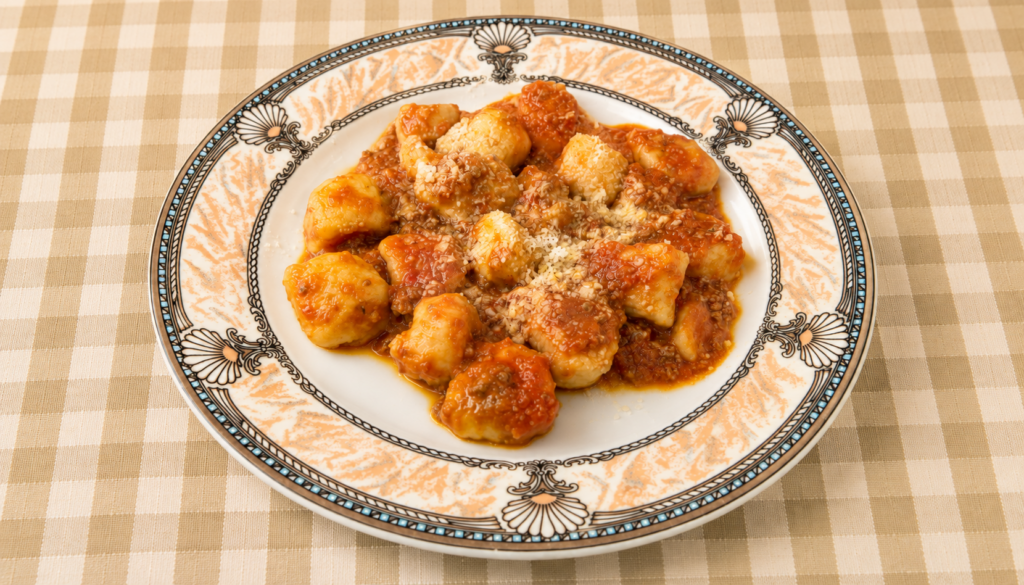
“Thursday gnocchi.” How many times have we heard this phrase? It is one of the most famous sayings associated with Roman cuisine, and even today, walking among the osterias and trattorias of the Capital, it is common to find gnocchi as the star of Thursday’s menu. But where does this tradition come from? And why specifically Thursday? Behind a simple plate of gnocchi lies a story that reveals a lot about Roman cuisine and Italy itself: a culinary tradition built over time through simple ingredients, family habits, religious observances, and the knack for turning whatever was on hand into something delicious. Why do people say “Thursday gnocchi”? The full proverb is “Giovedì gnocchi, venerdì pesce, sabato trippa” (“Thursday gnocchi, Friday fish, Saturday tripe”) and is traditionally associated with Roman popular culture, particularly in the working-class neighborhoods of the city. According to a widely accepted account, the custom consolidated after World War II, when families had to contend with ingredient shortages and the need to organize meals in an economical, nourishing way. Thursday became the perfect day to serve a substantial dish like potato gnocchi: simple, filling, and made with relatively inexpensive ingredients. The choice was also tied to the following day. Friday, according to Catholic tradition, was a “lean day” when meat was avoided. In Rome, dishes centered around fish and legumes were especially common, such as the famous salt cod with chickpeas. Then came Saturday, associated with tripe and the “fifth quarter”, the offal and less noble cuts of meat that Roman popular cuisine masterfully transformed into iconic recipes. In short, an entire week could almost be narrated through the menu. A curious fact: the saying might be older than world war II While the post WWII era certainly helped cement this custom, the story behind the saying may be even older. Historical records cited by various sources trace the expression back to at least the mid-19th century, when an anonymous poem in Roman dialect paired specific traditional dishes with different days of the week. This makes the story of “Thursday gnocchi” even more fascinating: it is not merely a habit born out of 20th-century necessity, but a tradition deeply rooted in a much older way of experiencing the dining table. As often happens in popular culture, customs born from practical needs eventually become part of a city’s identity. From gnocchi to roman cuisine: when simplicity becomes identity The story of gnocchi perfectly illustrates one of the defining traits of roman cuisine: the ability to take simple ingredients and elevate them into recognizable dishes deeply rooted in the local culture. Rome’s gastronomy was born from the intersection of many stories: families, markets, osterias, labor, and religious traditions. It is a humble, down-to-earth cuisine, often shaped by the principle of letting nothing go to waste. The “fifth quarter” is one of the most significant examples: ox tail, tripe, sweetbreads, organ meats, and other humble cuts became the stars of some of Rome’s best-known recipes. The same principle applies to many other traditional dishes: from carbonara to amatriciana, cacio e pepe to gricia, all the way to Roman-style and Jewish-style artichokes. Different recipes, but united by a single thread: a cuisine capable of celebrating quality raw ingredients without overcomplicating them. Gnocchi and the “Ottobrate Romane” There is another curious connection between gnocchi and the history of Rome. In the past, gnocchi were a centerpiece of the ottobrate romane, the famous autumn day trips organized during October to celebrate the end of the grape harvest. These were festive occasions filled with music, dancing, wine, and grand feasts. Among the indispensable dishes served were gnocchi, alongside tripe and roast suckling lamb. The ottobrate represented roman conviviality at its finest: gathering together, eating, drinking, and spending a day outside the city walls. It is a spirit that lives on today in the culture of Rome’s osterias. Why is “Thursday gnocchi” still relevant today? Today, we no longer need to plan our weekly meals based on ingredient scarcity or historical religious rules. And yet, Thursday gnocchi remains a living tradition. Perhaps the reason is simple: certain culinary habits end up becoming part of the collective memory. It is no longer just about why they started, but what they represent. Ordering a plate of gnocchi in a roman osteria on a Thursday means reconnecting, if only for a moment, with a piece of the city’s history. Because food isn’t just what we put on our plate. It is also when we eat it, who we share it with, and the stories it carries. And that is perhaps the true beauty of Roman tradition: behind a deceptively simple dish lies an entire history. Thursday gnocchi, then just as tradition demands And if you want to savor the authentic atmosphere of roman cuisine, we look forward to welcoming you to Osteria Ragno d’Oro, in the heart of the Prati neighborhood, just steps from St. Peter’s Basilica and the Vatican Museums. Book your table now!
Cacio e pepe

History and secrets of the ultimate roman pasta dish Some dishes are capable of defying time through the power of pure simplicity. In the panorama of classic roman first courses, alongside the iconic carbonara, the bold intensity of amatriciana, or the historical rigor of gricia, cacio e pepe stands out as a culinary masterpiece of subtraction. It is a recipe where the absence of frills enhances the brilliance of just a few elements: no gimmicks are needed when you have the bold savouriness of pecorino romano marrying the sharp heat of black pepper. Every forkful is a perfect balance of flavors that wraps around the palate and wins you over at the very first bite. The legend born along the transhumance trails If this recipe is a global gastronomic icon today, credit goes to the shepherds of the roman countryside “Agro Romano”. During the long months of transhumance, around the 15th century, their pockets and saddlebags could not hold easily perishable foods. Travel food had to be caloric, easy to carry, and long-lasting. The choice always fell on three elements: dried pasta, black peppercorns, and wheels of aged pecorino cheese. Black pepper served a dual strategic purpose: it warmed the shepherds’ bodies during the coldest nights and kept their focus sharp. Pecorino romano, thanks to its natural saltiness, could be preserved for weeks without spoiling. By combining these ingredients with the pasta cooking water, those men unknowingly gave life to one of the cornerstones of Italian cuisine. The pillars of cacio e pepe: the harmony of ingredients The greatness of this dish lies in the fact that it leaves no room for error or distraction: with so few elements on the plate, the quality of the raw ingredients must be impeccable. Forget heavy cream, butter, or finishing oil; authentic cacio e pepe stands on its own, thanks to: Pecorino romano DOP: preferably medium-aged, finely grated like rainfall so it can melt perfectly without clumping or stringing. Black peppercorns: Strictly crushed on the spot and dry-toasted in a pan to release all their deep aromatic oils. The pasta shape: egg tonnarelli are the ideal match thanks to their extraordinary porosity, but the elegance of spaghetti or the texture of a mezza manica rigata can also yield wonderful results. The science behind the perfect “cremina” The secret to a perfect cacio e pepe is not about adding extra fats, but about knowing how to master chemistry and temperatures in the kitchen. Many think it’s an elementary recipe, but every chef knows that the famous cream sauce “cremina” is the ultimate litmus test for any osteria. The starch released by the pasta into the cooking water acts as a natural emulsifier. By binding with the fats of the pecorino cheese at a strictly controlled temperature, it creates that velvety, smooth, and lump-free emulsion that drives lovers of this dish wild. One of the mainstays of roman cuisine At Osteria il Ragno d’Oro, we respect this ancient ritual every single day. We take care of the pepper toasting and the Pecorino paste with old-school attention and precision, bringing the most authentic, aromatic, and true Rome straight to your table. You can feast your eyes on the photos on our instagram profile, but the wonderful aroma rising from the plate can only be experienced by sitting at our tables. What are you waiting for? Book your table now!
Roman-Style Tripe

When talking about traditional Roman cuisine, our thoughts immediately go to carbonara, amatriciana, or cacio e pepe. Yet there is one dish that, more than any other, tells the story of the true working-class soul of the Capital: Roman-style tripe (trippa alla romana). It is not simply a recipe. It is a testament to the history of Rome, the character of its inhabitants, and the extraordinary ability of popular cuisine to transform simple ingredients into authentic culinary masterpieces. Behind every plate of tripe lies centuries of tradition, fascinating trivia, ancient trades, and a gastronomic culture that continues to thrive today in the best Roman trattorias. What is Tripe? Tripe belongs to the offal family, but reducing it to mere “waste” would be a mistake. On the contrary, it represents one of the most noble ingredients in traditional Italian gastronomy. It is obtained from the stomach of cattle, an organ quite different from the human one as it is divided into four chambers: rumen (rumine) reticulum (reticolo) omasum (omaso) abomasum (abomaso) Each part has a different texture and, once carefully cleaned and parboiled, is used to prepare one of the most iconic dishes of Roman cuisine. Its structure is perfect for slow cooking: it slowly absorbs flavors, tomatoes, spices, and aromatic herbs, becoming incredibly tender and savory. A Recipe Born from Necessity that Became a Symbol of Rome Many of the great dishes of Italian tradition were born from the necessity to waste nothing. Tripe is one of the most representative examples of this. In the Rome of yesteryear, the best cuts of meat were destined for the tables of the wealthiest families, while the common people received whatever was left of the animal. But from this apparent limitation emerged a cuisine capable of transforming ingredients considered “poor” into deeply flavorful recipes. Roman housewives learned to make the most of every part of the cow through slow cooking, simple ingredients, and a wealth of experience. Tripe, thanks to its texture and ability to absorb flavors, soon became the star of working-class dining tables. Even today, it remains one of the most beloved traditional Roman dishes for anyone seeking to discover the true cuisine of the Capital. The “Fifth Quarter”: The Soul of Roman Cuisine To truly understand tripe, one must understand the meaning of the famous quinto quarto (fifth quarter). This expression refers to all the parts of the animal that do not belong to the four main quarters destined for premium sale: offal, innards, and the cuts least requested by the market. In Rome, the fifth quarter has never been considered second-rate cuisine. On the contrary, it has become a unique gastronomic heritage. Tripe, oxtail (coda alla vaccinara), calf’s intestines (pajata), sweetbreads (animelle), offal stew (coratella), and liver remain the stars of a culinary tradition that has successfully transformed simplicity into excellence. It is a cuisine born of ingenuity, respect for the ingredients, and the desire to avoid waste—values that today closely align with the principles of food sustainability. The Testaccio neighborhood and the birth of a tradition The history of tripe is closely tied to the Testaccio neighborhood. This was the site of the Rome Slaughterhouse (Mattatoio), one of the most important in Europe between the late 19th and 20th centuries. The workers were often partially paid with offal, which was considered of little value at the time. It was in the homes of this neighborhood and in its small osterias that these raw materials were transformed into extraordinary dishes. The recipes began to be passed down from family to family, eventually becoming symbols of Roman cuisine renowned throughout the world. Tripe is therefore much more than a recipe: it is the story of a community that was able to turn simplicity into an art form. Why was tripe eaten on Fridays in Rome? One of the most fascinating pieces of trivia involves a tradition that is still alive in many Roman trattorias. For decades, Friday was the day dedicated to tripe. The origins are both religious and popular. According to Catholic tradition, eating meat—especially the most prized cuts—was avoided on Fridays. Tripe, classified as offal, represented an economical alternative that was perfectly in line with the customs of the era. Over the years, this custom became a true gastronomic fixture, so much so that even today, many Romans associate Fridays with the aroma of tripe simmering slowly in its sauce. The recipe for authentic Roman-Style Tripe Every family guards its own little secret, but the traditional recipe follows a few fundamental steps. The tripe is slow-cooked together with a soffritto (a sautéed base) of celery, carrot, and onion, then left to simmer and absorb flavors in a tomato sauce until it reaches a tender, rich consistency. What makes it unmistakable are the final ingredients: grated Pecorino Romano cheese and fresh lesser calamint (mentuccia). It is exactly this latter ingredient that provides the aromatic note distinguishing Roman-style tripe from all other Italian recipes. The result is an intense yet balanced dish, rich in aromas, capable of telling the story of Roman cuisine, bite after bite. From peasant cuisine to haute gastronomy In recent years, tripe has experienced a true rediscovery. Chefs, gastronomes, and food enthusiasts have brought traditional recipes back into the spotlight, recognizing the cultural value of the fifth quarter. What was once considered a humble dish is now appreciated for its authenticity, the quality of its raw ingredients, and a preparation method that requires experience, patience, and a respect for cooking times. Tripe perfectly embodies the modern concept of sustainable cooking: making the most of every part of the animal, reducing waste, and preserving gastronomic traditions. Those who taste an authentic Roman-style tripe don’t just discover a typical dish. They discover the ancient osterias of the Capital, family Sundays, recipes jotted down in grandmothers’ notebooks, noisy dinner tables, and the conviviality that has always characterized Roman cuisine. It is a dish that speaks of identity, memory, and belonging. It is a symbol of an authentic Rome,
Summer 2026 in Rome: unmissable events across music, culture, and tradition

The Roman summer is ready to offer thrills, shows, and unmissable events. Between concerts under the stars, cultural festivals, historical events, and religious celebrations, Rome confirms itself as one of the most fascinating destinations in Europe during the warmer months. If you are planning a day or an evening in the Capital, the advice is simple: start with lunch, an aperitivo, or dinner at Osteria Ragno d’Oro, right in the heart of the Prati district and just a short walk from St. Peter’s and Vatican City, and then let yourself be captivated by the events animating the city. The feast of saints Peter and Paul: The Romans’ most beloved tradition On June 29th, Rome celebrates its patron saints, St. Peter and St. Paul, with one of the most deeply felt anniversaries of the year. The day opens with the traditional Papal Mass at the Vatican and continues with the Infiorata on Via della Conciliazione, which transforms one of the city’s most iconic streets into a striking carpet of colorful flowers. Closing the celebration will be the historic Girandola, the fireworks display that will light up the sky over the Capital. Pro Tip: For those wishing to experience this special day, Osteria Ragno d’Oro represents the ideal starting point. Located on Via Silla, just minutes from St. Peter’s Square, it allows you to comfortably reach all the celebrations on foot. Lungo il Tevere Roma 2026: 80 days of events on the riverbanks From June 5th to August 24th, one of the most beloved events of the Roman summer returns: Lungo il Tevere Roma (Along the Tiber Rome). For eighty consecutive evenings, the banks of the Tiber will transform into a large village dedicated to culture, music, art, and gastronomy. Between Ponte Sublicio and Ponte Sisto, it will be possible to stroll among artisan stalls, refreshment points, exhibitions, live shows, and cultural initiatives. With over two million expected visitors, the event represents one of the main summer attractions in the Capital and offers the perfect opportunity to discover Rome in a lively and engaging atmosphere. Pro Tip: After a dinner based on traditional Roman specialties at Ragno d’Oro, reaching the Tiber is simple thanks to the nearby Ottaviano Metro A station and numerous connections to the historic center. Rome Summer Fest 2026: great music conquers the Capital From June 12th to September 15th, the Auditorium Parco della Musica Ennio Morricone and the Casa del Jazz will host the Roma Summer Fest 2026, one of the most important music festivals in Europe. Over seventy shows will bring international artists and great protagonists of the contemporary scene to Rome. At the Casa del Jazz, highly anticipated concerts are already expected, such as those by Devendra Banhart, Suzanne Vega, Patrick Watson, and Noa. It is a cultural offering capable of satisfying lovers of singer-songwriter music, jazz, folk, and international sounds, in one of the city’s most evocative settings. Pro Tip: Before heading to the concert, treat yourself to a stop at Osteria Ragno d’Oro to enjoy the great classics of Roman cuisine prepared according to tradition. Caracalla Festival 2026: the Teatro dell’Opera arrives at the Circus Maximus Between June 29th and July 31st, the Caracalla Festival exceptionally moves to the extraordinary setting of the Circus Maximus, organized by the Teatro dell’Opera di Roma. The public will be able to attend top-level productions such as Giuseppe Verdi’s Aida, the Romeo and Juliet ballet, and the prestigious Roberto Bolle and Friends evening. It is a unique opportunity to experience opera and dance under the summer sky of Rome, immersed in the city’s millennial history. Pro Tip: Thanks to the strategic location of Osteria Ragno d’Oro, just a short walk from the Ottaviano Metro A station, reaching the Circus Maximus is quick and easy, allowing you to organize a perfect evening of gastronomy and entertainment. Where to eat before the events of the roman summer? When planning a day of concerts, festivals, and cultural visits, choosing the right place to eat makes all the difference. Osteria Ragno d’Oro, a historic establishment in the Prati district, offers the authentic flavors of Roman cuisine in a welcoming and familiar environment. Carbonara, amatriciana, cacio e pepe, meat main courses, seafood specialties, and a selection of wines accompany every moment of the day. Whether you are visiting the Vatican, participating in the Feast of Saints Peter and Paul, strolling along the Tiber, or heading to a concert or show, at Ragno d’Oro you can stop for lunch, an aperitivo, or dinner before experiencing the best of the Roman summer 2026. Visit Us! We await you on Via Silla, in the heart of Prati, just a short walk from St. Peter’s and the Ottaviano Metro station. Book your table and experience Rome amidst tradition, taste, and great events.
Pasta alla gricia: history and identity of a timeless roman classic

There are dishes that need no introduction — only to be tasted — and gricia is one of them. Essential, intense, irresistible, it’s a recipe that proves how just a few ingredients can create something truly memorable. The aroma of sizzling guanciale, the pecorino embracing the pasta, the black pepper finishing each bite: every forkful is a small ritual of flavor, simple yet deeply satisfying. The origins of the gricia The origins of gricia are not entirely certain, and it’s precisely this aura of mystery that makes it one of the most fascinating dishes in Lazio’s culinary tradition. Some believe it is linked to Grisciano, a small village in the province of Rieti, not far from Amatrice. Another theory connects the name to the word gricio, used in Rome to refer to vendors of bread and food staples. More uncertain is the hypothesis that traces it back to griscium, a term that may have indicated an apron or work garment associated with flour and the bakers of ancient Rome. Perhaps the most evocative image, however, ties gricia to the world of shepherds—men who spent days away from home, carrying with them only a few simple ingredients such as dried pasta, guanciale, and pecorino. Characteristics of the gricia Whatever its true origins, one thing is certain: gricia embodies the most authentic and intense soul of Lazio’s culinary heritage and is often considered the mother of the great Roman pasta dishes. It is, in fact, regarded as the foundation of amatriciana, from which it mainly differs by the absence of tomato. After all, tomatoes arrived in Europe only in the 16th century and became widespread in Italian cuisine later on, while carbonara is generally seen as a much more recent creation, dating back to the post-World War II period. The ingredients of gricia are few, but they must be selected with great care: Guanciale, preferably from Amatrice, cut into strips or cubes Pecorino Romano DOP, with its bold and enveloping flavor Black pepper, freshly ground to release its full aroma As for the pasta, you can choose between long varieties like spaghetti or short shapes such as mezze maniche or rigatoni. Curiosities on the gricia In Grisciano, the small village near Amatrice that many associate with the dish’s origins, gricia is celebrated every year with a dedicated festival, usually held in August. The real secret to a perfect gricia lies in the final minutes: the emulsification. The pasta, drained al dente, is tossed in the pan with the guanciale and its rendered fat, which becomes the flavorful base of the dish. At this point, Pecorino and a few spoonfuls of pasta cooking water are gradually added, creating a creamy, well-bound sauce. At Osteria del Ragno d’Oro, this technique has become a true signature. We prepare it every day with the same care and attention. If you’d like a preview, take a look at our Instagram, but the best way is to come and taste it for yourself. Book now your table!